
The U.S. Channel Is a Relationship Economy (Not a Lead Gen Problem)
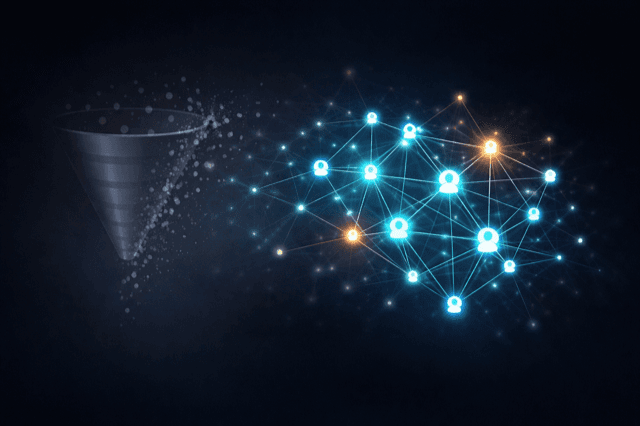
A lot of international companies approach the U.S. like a math equation:
More outbound + more meetings = more pipeline
That logic makes sense.
It just doesn't match reality.
Most revenue doesn't come from direct sales
One stat that catches people off guard:
- Forrester estimates 75% of global B2B trade flows through indirect channels
Most revenue is already controlled by ecosystems—not direct sales teams.
Digital growth didn't replace relationships
Buyers today:
- Use 10+ channels during the buying journey
- Are comfortable purchasing remotely
Source: McKinsey
But here's the part that matters:
Digital behavior didn't eliminate relationships.
It made them more selective.
The real constraint: attention
The biggest bottleneck in the U.S. channel isn't demand.
It's attention.
Good partners:
- Already have vendors they trust
- Already have pipeline
- Already have limited time
So when a new vendor shows up, the question isn't:
"Is this good?"
It's:
"Is this worth my time over everything else I could sell?"
What actually drives pipeline
When you strip it down:
- Referrals convert at ~26%
- Cold call to appointment: 2%
- Relationships drive pipeline quality
Source: https://www.landbase.com/blog/b2b-sales-statistics
Warmth beats volume.
Every time.
What we've learned building in this space
You don't break into the U.S. by generating more activity.
You break in by earning access.
That usually comes through:
- People who already have relationships
- Partners who trust the source
- Introductions that carry weight
Everything else is uphill.
Final thought
If you're trying to enter the U.S., you don't have a lead generation problem.
You have an access problem.
And access is controlled by:
- Trust
- Relationships
- Reputation
Not campaigns.
If this feels familiar
You're not alone. Most international vendors go through this phase.
The shift is realizing that pipeline doesn't start with outreach.
It starts with access.
That's the gap Cresyn is built to close.